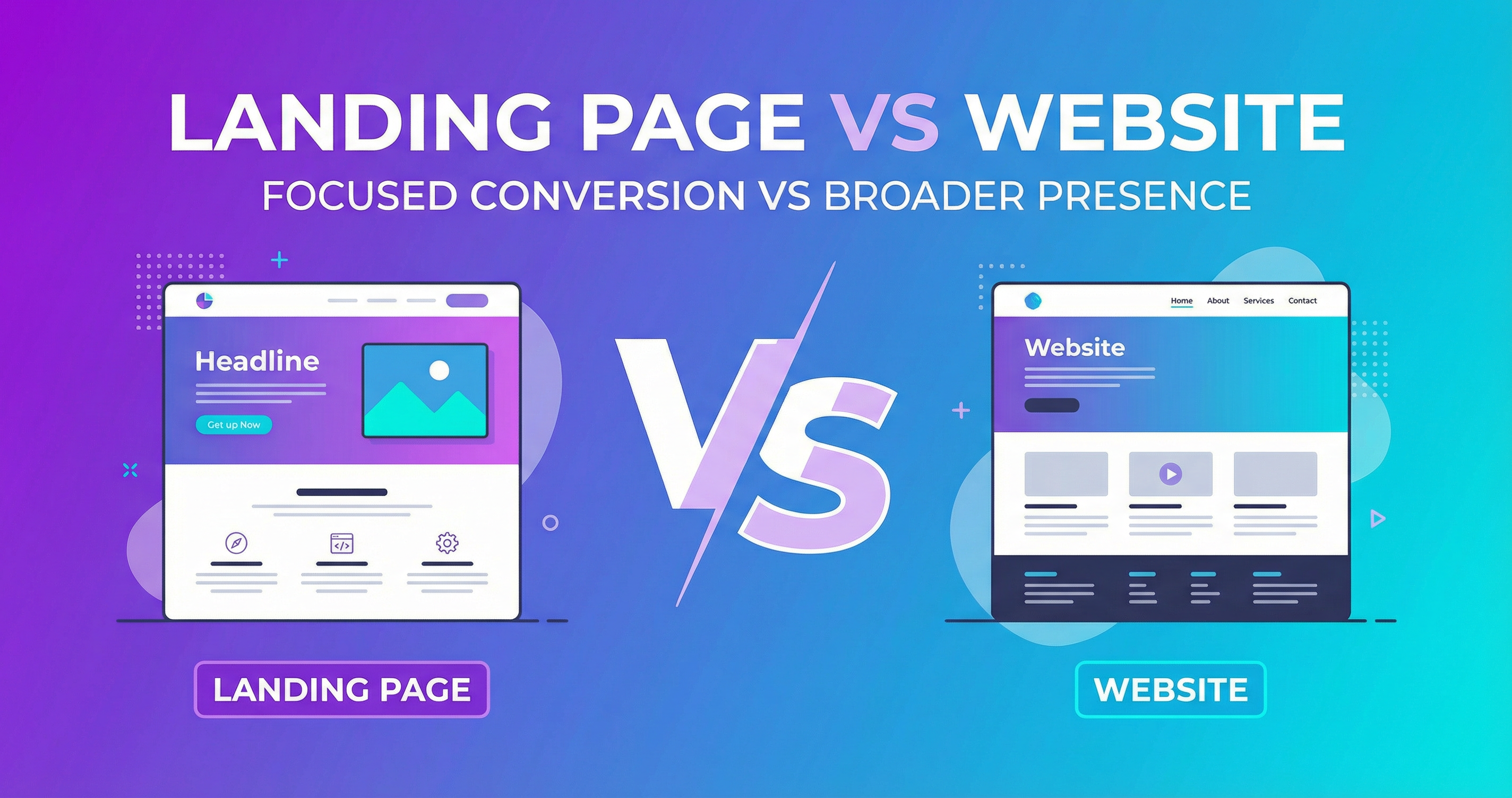
I get this question a lot: "Do I need a full website, or can I just use a landing page?" The answer depends on what you're trying to accomplish. Let me break down the differences so you can make the right choice for your business.
What's the Difference?
Website
A website is a multi-page digital presence for your business. It typically includes a homepage, about page, service pages, blog, portfolio, and contact page. It serves as your complete online storefront and information hub.
Purpose: Establish credibility, provide comprehensive information, rank on Google, serve multiple audiences.
Landing Page
A landing page is a single, focused page designed to drive ONE specific action. No navigation menu, no distractions — just a compelling message and a call-to-action.
Purpose: Convert visitors from a specific campaign (ads, email, social media) into leads or customers.
When You Need a Full Website
- You're establishing a business presence — People need to find you, learn about you, and trust you
- You offer multiple services or products — Each needs its own page to rank on Google
- SEO is important to you — Websites with multiple pages rank better than single pages
- You want to build long-term authority — Blog content, case studies, and resources build trust over time
- You need a "home base" — Somewhere to send people from social media, business cards, etc.
When You Need a Landing Page
- Running paid ads — Google Ads and Facebook Ads perform significantly better when they send traffic to a focused landing page rather than your homepage
- Promoting a specific offer — "50% off this month" or "Free consultation" deserves its own focused page
- Launching a new product or service — Create buzz and capture leads before the full launch
- Collecting email signups — "Download our free guide" pages convert better as landing pages
- Event registration — Webinars, workshops, or open houses need a focused registration page
Why Landing Pages Convert Better
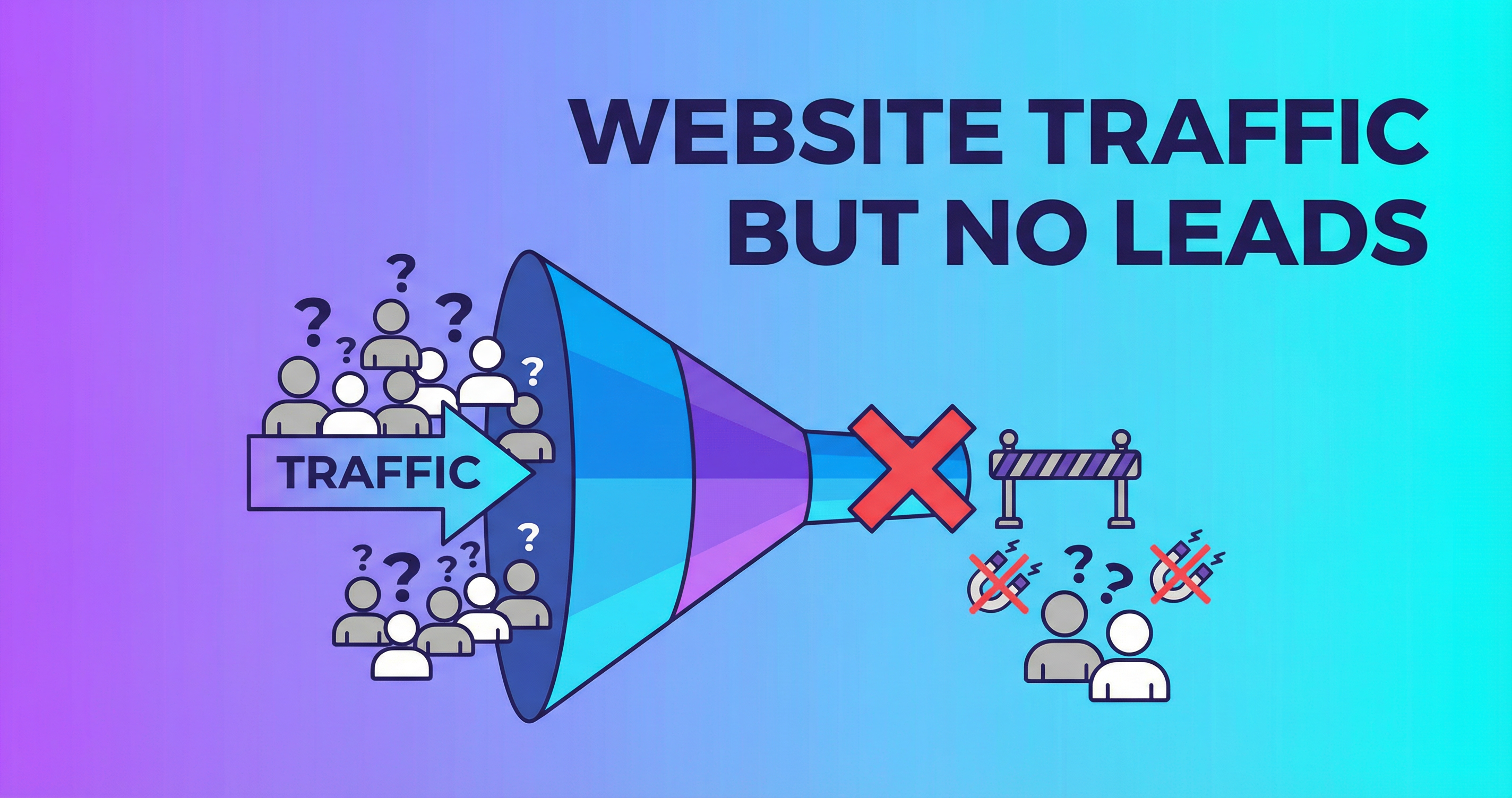
The average website has a conversion rate of 2-5%. Well-designed landing pages convert at 5-15% (some up to 30%+). Why?
- No distractions — No navigation menu means visitors can't wander off to other pages
- Single focus — One message, one offer, one action
- Targeted messaging — The content matches the exact ad or email that brought them there
- Urgency elements — Countdown timers, limited availability, special pricing
- Optimized for conversion — Every element is designed to drive the desired action
The Ideal Combination
Here's my recommendation for most businesses: have both.
Your website is your permanent online presence — it handles SEO, credibility, and comprehensive information. Landing pages are deployed for specific campaigns — ads, promotions, and lead generation.
Think of it this way:
- Website = Your store
- Landing pages = Your promotional displays
What Makes a Landing Page Effective
- Compelling headline that matches the ad/email that brought them there
- Clear benefit statement — What's in it for them?
- Supporting evidence — Testimonials, stats, results
- Visual hierarchy — Guide the eye to the CTA
- Short form — Name and email is usually enough
- Mobile optimization — Most ad traffic is mobile
- Fast loading — Every second of delay costs conversions
- A/B testing — Test different headlines, images, and CTAs to optimize performance
I Build Both
Whether you need a complete business website, a high-converting landing page, or both, I've got you covered. Let's figure out the right strategy for your specific goals.