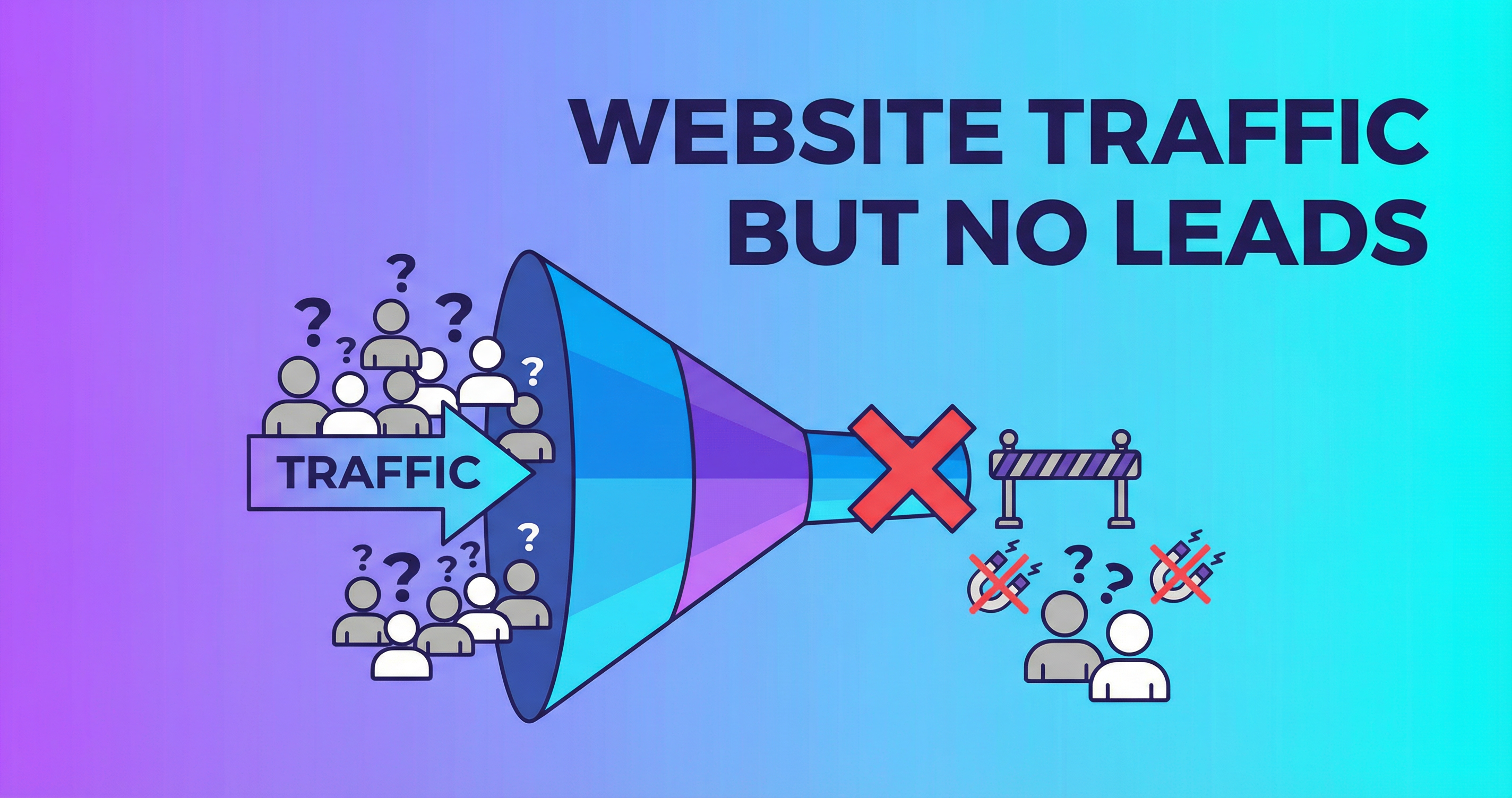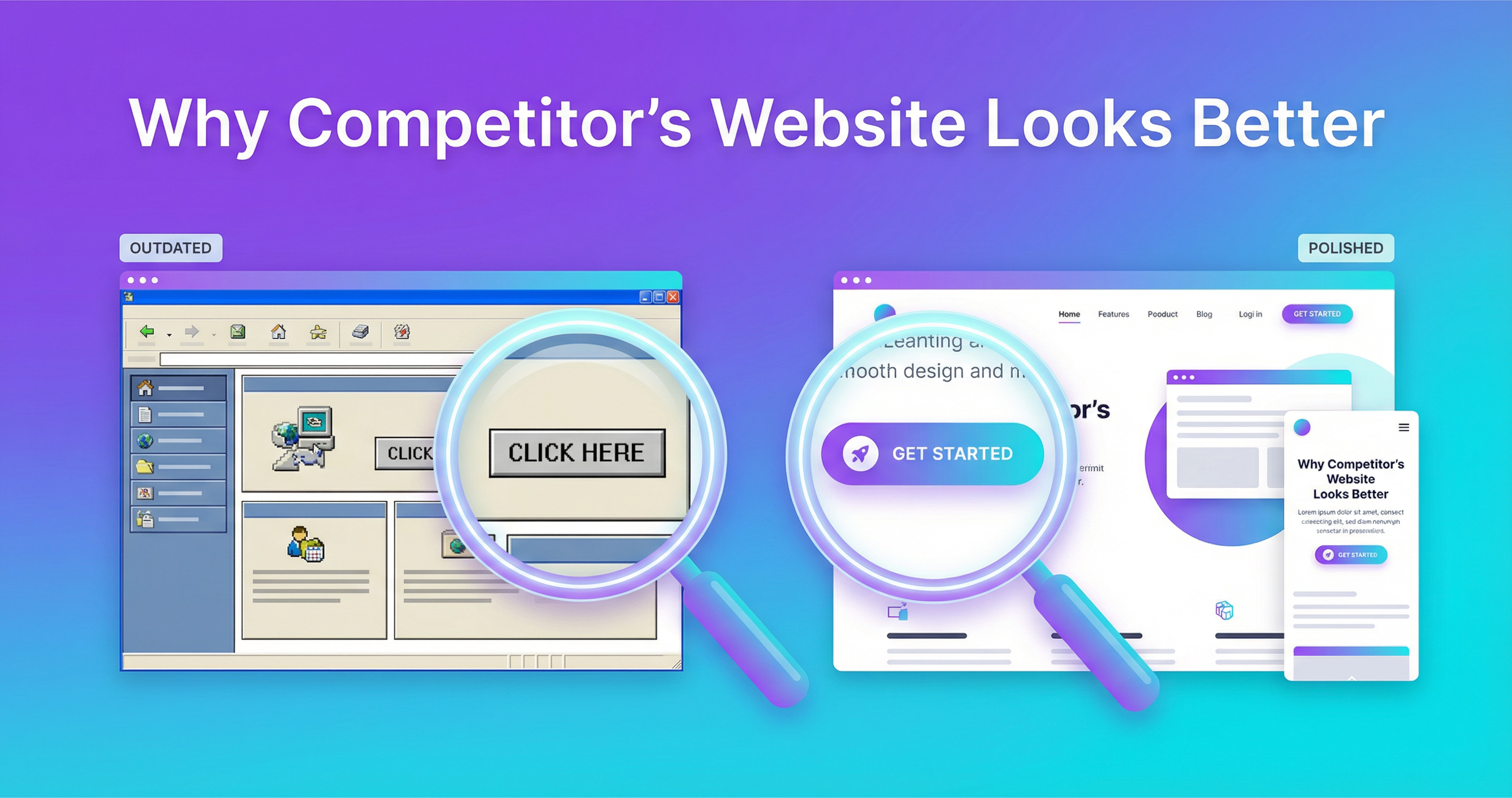
A pretty website that doesn't generate revenue is just an expensive digital brochure. Your website's job isn't to win design awards — it's to make you money.
After building websites for businesses across dozens of industries, I've identified the features that consistently drive revenue. Here's what your website needs to actually convert visitors into customers.
1. Clear Value Proposition Above the Fold
You have about 3 seconds to communicate what you do and why someone should care. If a visitor has to scroll or click around to understand your business, most of them will leave.
Above the fold (the part of the page visible without scrolling), you need:
- A headline that clearly states what you do and who you serve
- A subheading that explains the benefit to the customer
- A call-to-action button that tells them what to do next
Bad example: "Welcome to Our Website" (tells the visitor nothing)
Good example: "Custom Websites That Bring You Customers — Starting at $199" (clear, specific, actionable)
2. Multiple, Obvious Calls-to-Action (CTAs)
Every page on your website should have a clear next step for the visitor. Don't make people hunt for how to contact you or buy from you.
Effective CTAs include:
- Primary CTA — "Get a Free Quote," "Book Now," "Start Your Project"
- Secondary CTA — "Call Us," "View Our Work," "Learn More"
- Sticky CTA — A button that follows the user as they scroll (mobile especially)
I recommend having a CTA visible at all times — in the header, within the content, and at the bottom of every page.
3. Social Proof That Builds Trust
People buy from businesses they trust. Social proof accelerates trust-building dramatically:
- Customer testimonials with real names and photos (or company names)
- Star ratings from Google or industry review sites
- Case studies showing real results you've achieved for clients
- Client logos — "As seen in" or "Trusted by" sections
- Numbers — "500+ projects completed" or "10 years in business"
- Before and after examples (especially powerful for visual services)
4. Live Chat or Instant Communication
When someone has a question, they want an answer NOW — not after filling out a form and waiting 48 hours. Live chat increases conversion rates by up to 40%.
Options include:
- Live chat widgets (I build these into my sites)
- WhatsApp/SMS integration
- Click-to-call buttons
- AI chatbots for after-hours (basic Q&A)
5. Fast Loading Speed
Every additional second of load time reduces conversions by 7%. If your site takes 5 seconds to load instead of 2, you're losing roughly 21% of potential customers.
Fast-loading websites need:
- Optimized, compressed images
- Minified CSS and JavaScript
- Proper caching headers
- Quality hosting
- Clean, efficient code (not bloated page builders)
6. Contact Forms That Actually Convert
Your contact form should be short, simple, and easy to complete. Every extra field you add reduces submissions by approximately 10%.
For most businesses, you only need:
- Name
- Email or Phone
- Brief message or service selection
That's it. Don't ask for their mailing address, company size, annual revenue, and blood type. Keep it simple.
7. Service/Product Pages That Sell
Each service or product you offer should have its own dedicated page with:
- Clear description of what it is and what's included
- Benefits (not just features) — what's in it for the customer
- Pricing or price range (transparency builds trust)
- Social proof specific to that service
- FAQ section addressing common objections
- A clear CTA to get started
8. Blog Content That Attracts and Educates
A blog isn't just for fun — it's one of the most powerful SEO and trust-building tools available. Each blog post is another page that can rank on Google and bring in potential customers.
Blog content should:
- Answer real questions your customers ask
- Demonstrate your expertise
- Include relevant keywords for SEO
- Link to your services where appropriate
- End with a call-to-action
9. Mobile Optimization
More than half your visitors are on phones. If your mobile experience is poor, you're losing more than half your potential revenue. Mobile optimization means:
- Touch-friendly buttons and navigation
- Click-to-call phone numbers
- Readable text without zooming
- Fast loading on cellular networks
- Simplified forms for thumb-typing
10. Analytics and Tracking
You can't improve what you don't measure. Every business website should have:
- Google Analytics 4 (free, powerful)
- Conversion tracking (which pages generate the most leads)
- Heatmaps (where people click and how far they scroll)
- Form submission tracking
I Build Websites That Make Money
Every website I build includes these revenue-generating features as standard. I don't build digital brochures — I build sales machines.