If you're a business owner looking to get a website built, your first question is almost always: "How much is this going to cost me?" And honestly? The answer is all over the place — because most developers and agencies don't give you a straight answer.
I'm going to change that. Here's my completely transparent breakdown of what websites actually cost in 2026, what you get at each price point, and why working with a freelance developer like me gives you the best bang for your buck.
Understanding Website Pricing: Why Does It Vary So Much?
Before we dive into numbers, you need to understand why pricing varies so wildly. A website isn't a commodity like a gallon of milk — it's a custom-built tool for your business. The cost depends on:
- Complexity — A 5-page brochure site is very different from a 50-page e-commerce store
- Design — Template vs. custom design from scratch
- Functionality — Contact forms, booking systems, payment processing, user accounts
- Content — Do you have your copy and images ready, or does someone need to create them?
- Who builds it — DIY, freelancer, small agency, or large agency
- Timeline — Rush jobs cost more, always
Option 1: DIY Website Builders ($0–$500/year)
Platforms like Wix, Squarespace, WordPress.com, and GoDaddy let you drag-and-drop your own website together. Sounds great in theory, right?
What You Get
- Pre-made templates you can customize
- Basic hosting included
- Simple editing tools (no coding needed)
- Built-in SSL certificates
The Reality
DIY builders work great for personal blogs or hobby projects. But for a real business? Here's what I see constantly:
- Cookie-cutter look — Your site looks like thousands of others using the same template
- Slow loading speeds — Bloated code and shared hosting mean sluggish performance
- Limited SEO control — You can't optimize what you can't access
- You're locked in — Try moving your Wix site somewhere else. You can't.
- Hidden costs add up — Premium templates ($50-200), plugins ($10-50/month each), apps, custom domains — suddenly "free" costs $500+/year
- Time cost — You'll spend 40-100+ hours learning the platform and building something mediocre
My honest take: If your business makes money, your website is too important to DIY. Your time is better spent running your business.
Option 2: Freelance Developer ($200–$5,000)
This is where I come in — and where most small businesses get the best value.
A skilled freelance developer gives you professional quality without the agency overhead. No fancy office rent, no project managers, no account executives — just a direct relationship with the person actually building your site.
What You Get With Me
- Custom design that matches your brand and stands out from competitors
- Clean, fast code — no bloated templates slowing you down
- Mobile-responsive design that looks perfect on every device
- SEO built in from day one — proper meta tags, fast loading, structured data
- Direct communication — you talk to me, not a middleman
- Ongoing support — I don't disappear after launch
My Pricing Tiers
| Package | Price | Best For | What's Included |
|---|---|---|---|
| Starter | $199 | New businesses, personal brands | 3-5 pages, mobile responsive, contact form, basic SEO |
| Professional | $499 | Growing businesses | 5-10 pages, custom design, advanced SEO, speed optimization, analytics |
| Business | $999 | Established businesses | 10+ pages, e-commerce ready, blog, booking systems, full SEO suite |
No hidden fees. No surprise charges. What I quote is what you pay.
Option 3: Web Design Agency ($5,000–$50,000+)
Agencies have their place — usually for large corporations with complex needs and big budgets. But here's what you're actually paying for:
- Office space and overhead (not your problem, but you're paying for it)
- Project managers, account executives, designers, developers — multiple people involved
- Longer timelines (3-6 months vs. 1-4 weeks with me)
- Ongoing retainer fees ($500-$5,000/month)
For most small to medium businesses, an agency is overkill. You're paying premium prices for the same result I can deliver at a fraction of the cost.
What Actually Affects Your Website Cost?
Number of Pages
A simple 5-page website (Home, About, Services, Portfolio, Contact) costs significantly less than a 20-page site with multiple service pages, case studies, and a blog.
Custom Functionality
Standard features like contact forms and image galleries are straightforward. But if you need:
- Online booking/scheduling systems
- E-commerce with payment processing
- Customer portals or member areas
- Custom calculators or tools
- Third-party integrations (CRM, email marketing, etc.)
Each of these adds development time and cost.
Content Creation
If you provide your own text and images, great — that saves time. If you need copywriting, photography, or stock images sourced, that's additional work.
Ongoing Maintenance
Your website isn't a "set it and forget it" tool. It needs regular updates, security patches, and content refreshes. I offer affordable maintenance plans starting at $49/month.
The Real Cost of a Cheap Website
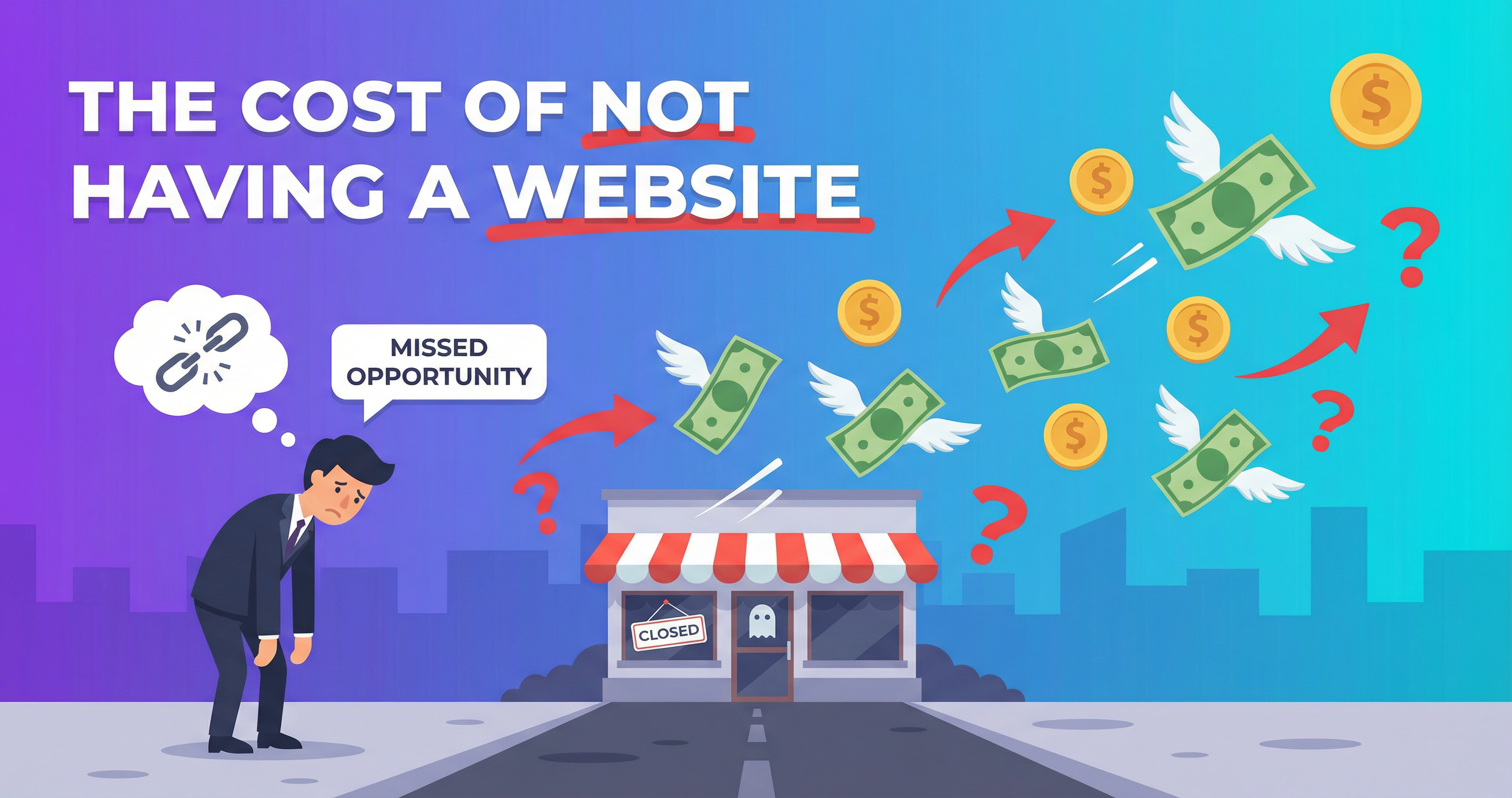
Here's something most people don't consider: a bad website costs you more than no website.
If your site is slow, ugly, or hard to navigate, potential customers will leave and go to your competitor. That's not a theory — studies show:
- 88% of users won't return to a website after a bad experience
- 75% of people judge a business's credibility based on its website design
- 53% of mobile visitors leave a page that takes more than 3 seconds to load
A $200 website that drives away customers costs you far more than a $999 website that converts visitors into paying clients.
How to Get the Most Value
- Know your goals — What do you want your website to accomplish? More calls? Online sales? Brand awareness?
- Prepare your content — Have your text, logo, and images ready to speed up the process
- Start with what you need — You can always add features later. Don't over-build on day one.
- Invest in quality — Your website is your 24/7 salesperson. Make it a good one.
Ready to Get Started?
I offer free consultations where we'll discuss your needs, timeline, and budget. No pressure, no commitments — just honest advice about what your business needs.
Or check out my recent projects to see the quality of work you'll get.